On June 12–13, 2026, the 2nd China-Russia Symposium on Conservation and Sustainable Utilization of the Fisheries Resources in Far Eastern Area was held in the city of Dalian within the framework of a dual international event: the 6th GTI NEA Marine Cooperation Sub-Committee Meeting Supported by the UNDP and the 2nd China-Russia International Symposium on Conservation and Sustainable Utilization of the Fisheries Resources in Far Eastern Area. The Greater Tumen Initiative, North-East Asia (GTI NEA) is an initiative for the development of the Greater Tumangan (originally known as the Tumangan/Tumenjiang River Area Development Programme, TREDA), an intergovernmental cooperation mechanism between four countries - China, Mongolia, the Republic of Korea, and the Russian Federation - supported by the United Nations Development Programme (UNDP) (http://www.tumenprogramme.org/).
The Symposium was co-organized by the Dalian Ocean University (DOU), A.V. Zhirmunsky National Scientific Center FEB RAS (NSCMB FEB RAS), and the Far Eastern State Technical Fisheries University (FESTFU). Among local co-organizers were a number of China’s scientific and educational structures, offices and laboratories, primarily the International Exchange and Cooperation Office, Dalian Ocean University; the Office of Science and Technology; the College of Marine Science and Environment; the Northern Ocean Big Data Center; and the Dalian Belt and Road Joint Laboratory for Conservation and Sustainable Use of Aquatic Germplasm Resources. Professor Huo Zhongming, the Dean of the College of Fisheries and Life Sciences, played a major role in establishing ties with the NSCMB FEB RAS and visited Vladivostok twice to participate in events held by our Center.
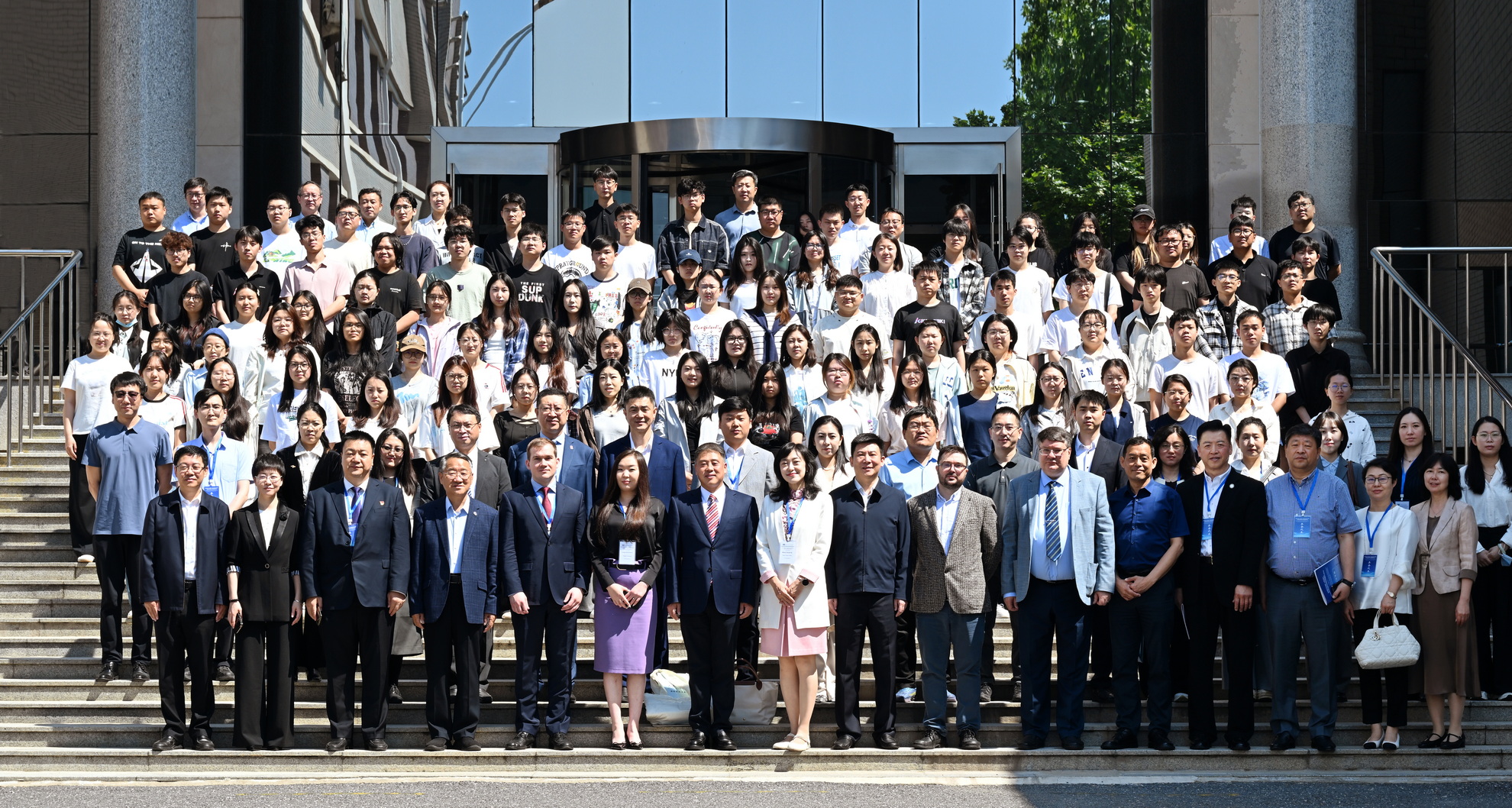
At the beginning, Zhu Lili, a Deputy Director of the Dalian Municipal Bureau of Commerce, Wang Jiangning, a Senior Project Officer of the GTI Secretariat, Marina Dmitrievna Sokolova, the Vice President of FESTFU (via video link), and representatives of the DOU gave their welcoming remarks. The symposium was opened by Dr. Konstantin A. Lutaenko, the Deputy Director for International Cooperation, NSCMB FEB RAS, who delivered a half-hour overview report “Marine mollusk’s resources and biodiversity under environmental and climatic changes in the North-eastern Asia and ways of their restoration and conservation”. Dr. Lutaenko elucidated, on a comparative basis, the main trends and available data on the changes in biodiversity and abundance of mollusks observed in Japan, China, Korean Peninsula, and the Russian Far East. He emphasized that the major factors responsible for the decline in mollusk stocks, species richness, and general degradation/changes of fauna in the region are climate change, overfishing and exploitation of wild populations, pollution of shallow-water areas, mainly port zones, poaching, tourism, overall habitat degradation, hypoxia and ocean acidification, and invasive species. Aquaculture can help both in recovery of mollusks stocks and improving their habitat: aquaculture and nature conservation overlap in terms of best management practices (BMP) aimed at seafood production along with protection of native ecosystems, prevention of habitat degradation, and minimization of carbon emissions. Dr. Lutaenko also noted that the sustainable development of the aquaculture sector would require advanced management methods to reduce negative effects on the environment, habitat loss, water quality degradation, and disease outbreaks. He called for strengthening international efforts to achieve these goals, including development of bilateral studies by the DOU and the NSCMB FEB RAS. The presentations by participants from the Hainan University, the Zhejiang Ocean University, the Third Institute of Oceanography of the Ministry of Natural Resources of the PRC, and the Taiwan Ocean University addressed a number of aquaculture issues, changes in mollusk habitats under climate change, and scientific foundations of exploitation activities (see the Programme).
Dr. Ekaterina Petrova, Deputy Director for Science at the Maritime Institute of FESTFU, Associate Professor of the Department of Navigation, delivered a plenary report entitled “Trans-Arctic transport corridor: challenges, prospects, solutions” available by video link (https://dalrybvtuz.ru/news/2026-06-16-ekspert-iz-dalrybvtuza.htm).
In his presentation, “The role of neurotransmitters in the life history of bivalves: from fundamental data to mariculture”, Dr. Vyacheslav A. Dyachuk, the Head of the Department of Mariculture, NSCMB FEB RAS, considered the integration of modern advances in invertebrate neuroscience to technologies and development of mariculture. The report aimed to highlight and address the issue of efficiency in production of cultivated aquatic organisms using neurotransmitters to optimize the processes of maturation of sex products, spawning, and survival (exemplified by a bivalve culture). These knowledge and technologies may contribute to finding solutions of such practical issues as conservation and increase in biomass of cultivated species, biosecurity, and scientific bases for the restoration and reproduction of marine bioresources through aquaculture of commercial species using the basic advances of science.
The symposium was attended by more than 100 guests, including graduate and postgraduate students of the DOU. The presentations attracted considerable interest and raised numerous questions from participants. In general, the symposium showed that Chinese and Russian scientists have much to share in the field of bioresources, biodiversity, and aquaculture of the marginal seas in North Asia. It also revealed a broad range of opportunities for international cooperation and joint research. The Chinese side organized an interesting cultural program and a tour of university’s activities.
On the second day of the symposium, Dr. K.A. Lutaenko and Dr. V.A. Dyachuk were familiarized with the studies on biology, reproduction, genetics, and development of invertebrates, fish, and algae conducted by the DOU laboratories. They also visited the Dalian Belt and Road Joint Laboratory for Conservation and Sustainable Use of Aquatic Germplasm Resources operated under the China’s national Belt and Road Initiative (BRI, also known as the One Belt One Road, a global strategy for infrastructure and economic development created by the Chinese government in 2013). A joint workshop for promotion of cooperation in these areas was held with the participation of representatives from Chinese fisheries companies and young scientists from the DOU. The parties supported the proposal to exchange graduate students and young scientists, carry out joint studies on biology and genetics of shellfish and other invertebrates, and invite NSCMB FEB RAS scientists to give lectures at the DOU. A wish was expressed to organize the third symposium in Vladivostok on the basis of the NSCMB FEB RAS. Participants especially noted the contribution of biologist Dr. S.I. Maslennikov who passed away unexpectedly but made great efforts for the development of Russian-Chinese cooperation in the field of marine biology and aquaculture.


The joint symposium of the DOU and the NSCMB FEB RAS was the first international visiting event of the year 2026. It took place in the traditionally friendly atmosphere of Russian-Chinese scientific cooperation. We hope that further interaction between our institutions will strengthen and broaden these ties.